



ESL global green company

Protection of atmospheric air

We provide consulting services

Development of inventory of stationary emission sources, support and obtaining of emission permits

Who are the customers of the service (which enterprises)

Business entities in the fields of production, processing, processing, cultivation of agricultural products, transportation (gas), storage (gas, grain, fuel, etc.), extraction (minerals), heating (solid fuel boilers, gas, pellets), wastewater treatment, etc.

Legislation
  1. Law of Ukraine “On protection of atmospheric air”
  2. Resolution of the Cabinet of Ministers of Ukraine dated March 13, 2002 No. 302 “On approval of the Procedure for carrying out and payment for works related to the issuance of permits for emissions of pollutants into the atmosphere by stationary sources, registration of enterprises, institutions, organizations and citizens – entrepreneurs who have received such permits”  
  3.  Order of the Ministry of Ecological Safety of Ukraine dated 10.02.1995 No. 7 “On approval of the Instruction on the content and procedure for drawing up a report on the inventory of pollutant emissions at the enterprise”
  4.  Order of the Ministry of Ecology and Natural Resources of Ukraine dated 10.05.2002 No. 177 “On approval of the Instruction on the procedure and criteria for state registration of facilities that have or may have a harmful impact on human health and air quality, types and volumes of pollutants emitted into the atmosphere”
  5.  Order of the Ministry of Health of Ukraine of 19.06.1996 № 173 “On approval of the State Sanitary Rules for Planning and Development of Settlements” 
  6.  Tax Code of Ukraine 
  7.  Law of Ukraine “On the permitting system in the sphere of economic activity” 
  8.  Закон України “Про Перелік документів дозвільного характеру у сфері господарської діяльності”
  9.  Наказ Мінприроди України від 06.02.2009 №52 “Про затвердження Правил технічної експлуатації установок очистки газу”
What documents are needed to order the service
  1. Legal documents of the enterprise
  2. Nomenclature and volumes of manufactured products (or services) for the reporting and previous year
  3. Cartographic material of the industrial sites of the enterprise in scale, indicating the objects, buildings and structures of production spheres, adjacent residential and public facilities
  4. Map-scheme of the enterprise with buildings and structures and explication (name of each building)
    General plan with geo-basis 
    Information about the business entity located on the territory of the enterprise or bordering it (name, address)
  5. Characteristics of the production structure of the enterprise and description of the main and auxiliary technological processes
  6. List of main technological equipment, design and actual capacity, date of commissioning, date of last reconstruction or modernization, standard depreciation period, operating mode (hours/shift, hours/year)
  7. Information on the consumption of raw materials, materials, fuel and energy resources for the reporting and previous year by unit of technological equipment (emission sources)
  8. Block diagrams of production processes
  9. For newly created emission sources, a copy of the EIA section of the project documentation, which received a positive conclusion within the requirements of the current legislation
  10. In case of instrumental measurements, the schedule of operation of the equipment on which the measurements are carried out
  11. In case of instrumental measurements, the schedule of operation of the equipment on which the measurements are carried out
  12. Information on air protection measures envisaged by the city, regional and other environmental protection programs (name of the measure, deadline, amount of investments, UAH thousand, emission reduction effect, tons per year).
  13. Information on the implementation of the best available production technologies for enterprises of group 1.
How long does it take to prepare

Preparation of documents and obtaining an emission permit is carried out within up to 4 calendar months

For what period is issued
  1. Business entities of the first group receive an emission permit for up to 7 years
  2. Business entities of the second group receive an emission permit for up to 10 years
  3. Business entities of the third group receive a permit for emissions indefinitely

Development of gas cleaning equipment passports (GCE)

Who are the customers of the service (which enterprises)

Enterprises that operate cyclones, dry adsorbers, as well as all kinds of filter systems (paper, gas discharge, woven and non-woven, felt, membrane, cardboard, electrostatic and plasma), absorbers and scrubbers with the appropriate principle of operation (involving liquids or reagents).

What documents are needed to order the service
  1. Legal documents of the enterprise
  2. Emission permit, if any
  3. Technical passport (manufacturer’s plant) of gas cleaning equipment
  4. Characteristics of the production structure of the enterprise and description of the main and auxiliary technological processes – inventory of emission sources
  5. List of main technological equipment, design and actual capacity
  6. In case of instrumental measurements, the schedule of operation of the equipment on which the measurements are carried out
  7. Information on the implementation of the best available production technologies for the enterprises of the first group.
How long does it take to prepare

The work of the company’s specialists is carried out within 15 calendar days, in particular, it is a visit to the site of the enterprise for field measurements, preparation of GOU passports, protocols and acts of installation efficiency

For what period is issued
  1. GOU passports are developed and approved by the internal order of the enterprise – indefinitely or revised if new technologies are introduced. 
  2. Measurement of pollutants at the GOU and drawing up of performance certificates is carried out at least once a year or depending on the conditions established in the current permit for emissions of pollutants into the atmosphere, or in accordance with the approved schedule of the monitoring program. 

Organization of air control on the border of the sanitary protection zone of the SPZ

Who are the customers of the service (which enterprises)
  1. Enterprises of the second and first groups that have valid permits for emissions of pollutants into the atmosphere;
  2. Enterprises that have residential buildings within the SPZ of the enterprise; 
  3. Підприємства, які отримали позитивний висновок оцінки впливу на довкілля;
  4. Підприємства, які є балансоутримувачами полігонів, установок високотемпературного спалювання відходів тощо;
  5. Підприємства, які мають намір щодо встановлення меж зони санітарної охорони.
What documents are needed to order the service
  1. Legal documents of the enterprise
  2. Current permit for emissions of pollutants into the atmosphere
  3. Positive conclusion of the environmental impact assessment
  4. Conclusion on the establishment of the sanitary protection zone of the enterprise
  5. Characteristics of the production structure of the enterprise and description of the main and auxiliary technological processes – inventory of emission sources
  6. List of main technological equipment, design and actual capacity
How long does it take to prepare

The work of the company’s specialists is carried out within 15 calendar days, in particular, it is a visit to the site of the enterprise for field measurements and preparation of protocols / reports

For what period is issued

Works on laboratory and instrumental measurements of pollutant parameters within and outside the SPZ are carried out in accordance with the established conditions of the current permit for emissions of pollutants into the atmosphere, monitoring program/schedule or in accordance with other regulatory requirements.

Development of a program for monitoring emissions of pollutants into the atmosphere

Who are the customers of the service (which enterprises)
  • Enterprises of the second and first groups that have valid permits for emissions of pollutants into the atmosphere;
  • Enterprises that have residential buildings within the SPZ of the enterprise; 
  • Enterprises that received a positive conclusion of the environmental impact assessment;
  • Enterprises that are balance holders of landfills, high-temperature waste incineration plants, etc.
What documents are needed to order the service
  • Legal documents of the enterprise
  • Current permit for emissions of pollutants into the atmosphere
  • The positive conclusion of the environmental impact assessment
  • Conclusion on the establishment of the sanitary protection zone of the enterprise
  • Characteristics of the production structure of the enterprise and description of the main and auxiliary technological processes – inventory of emission sources
  • List of main technological equipment, design and actual capacity
How long does it take to prepare

The work of the company’s specialists is carried out within 2 calendar months, which includes the analysis of all available documents, determination of the main parameters of the study, preparation of the monitoring program and schedule, coordination / approval by the authorized state bodies, if necessary. 

For what period is issued

The monitoring program of atmospheric air research and emissions of pollutants into the atmosphere is developed and agreed for a period of 5 years. 

HAVE QUESTIONS ABOUT PERMITS IN THE FIELD OF AIR PROTECTION

Leave a request for consultation of a leading expert in the development and obtaining permits for compliance with the Law of Ukraine

    We work with the following projects

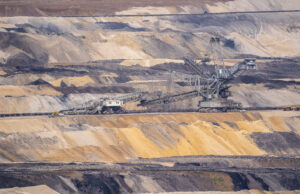
    Sand quarry


    We got acquainted with the ESL company through word of mouth, and our partners and the company conducted instrumental measurements to implement the post-project monitoring plan. We contacted ESL to analyse the received EIA conclusion to determine the mandatory works and fulfilment of the conditions of turnkey post-project monitoring on an extended basis.

    The company takes over all decisions, freeing up our time to fulfil our target tasks. The company’s specialists carried out high-quality and fast work on instrumental measurements. They performed a complete analysis of the EIA conclusion, identified pain points of the possible negative impact of our company’s activities on the environment and recommended solutions.
     

    Sand quarry
    Head of the environmental protection department
    Asphalt concrete plant

    We got acquainted with ESL company at the exhibition, exchanged contacts. After the exhibition we had an online consultation on our enterprise. We were keenly interested in the question of the need to conduct an EIA procedure.

    It turned out that ESL has its own mobile laboratory that conducts instrumental measurements throughout Ukraine. The company’s specialists determined the criteria for the production activities of the enterprise, according to which they identified the need for an EIA procedure. As part of the procedure, ESL independently developed and uploaded to the register an EIA report and all documents in accordance with the established procedure.

    We received a permit document – an EIA conclusion, which allows our company to operate within the framework of the current environmental legislation.

    Asphalt concrete plant, director

    Agricultural sector

    Manager Yulia called and offered advice on the need to develop and obtain environmental documentation. We had a question on our “agenda” – to determine the difference between a special water use permit and a special permit for the use of subsoil.

    Yulia answered questions within the framework of a free audit and identified the need to obtain a permit for special water use, as we have a well on the balance sheet from which water is taken more than 5 cubic meters per day, but not more than 300 cubic meters per day.

    We managed to save the company from paying penalties in the amount of 5 times for using water without the established limit for water intake in the permit for special water use.

    The enterprise for growing crops,
    director

    Grain terminal

    We found ESL on the Internet, looked at the website and decided to test a free consultation. We asked about the possibility of adjusting the existing emission permit.

    Oleksiy contacted us and not only answered our questions, but also advised on the measurement of our sources of pollutant emissions into the air. Working with experts is very comfortable, so we chose ESL.

    The guys registered a report on the inventory of emission sources, and registered the enterprise with the Ministry of Environment of Ukraine. They received a permit for emissions of pollutants into the atmosphere for 10 years.

    As a result, we have put in order the environmental documentation in and streamlined the payment to the tax authorities for air pollution.

    Grain terminal,
    environmental protection specialist

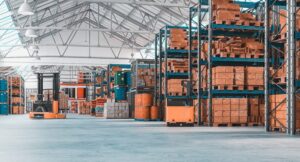
    The company is a waste disposer

    We found ESL on Facebook, contacted the messenger with a question about the need to develop a declaration or register card for waste.
    The company’s specialists conducted a free audit of documentation with a visit to the enterprise, developed a register card according to form number 2 and included it in the register of waste generation facilities.

    We have finally figured out the nomenclature and volumes of waste generation, quantitative and qualitative characteristics of waste. Now there are plans for measures to reduce the volume of waste generation and the degree of their hazard.
    The company is a waste disposer
    director
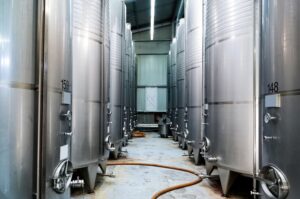
    Winery

    ESL was recommended by friends who have been working with ESL for many years.

    We asked a question regarding the timing of the registered waste inventory report. The main point in the decision to work with the company was the availability of certificates and certificates that give the right to develop project documents.

    Specialists visited the site, identified new types of waste that were not included in the existing inventory, conducted a re-inventory and received positive responses from the Department of Ecology of Odesa Oblast.

    As a result, we have an understanding of what types of waste are generated at the enterprise and how to handle them.

    The winery,
    chief engineer