



ESL global green company
Monitoring, reporting and verification (MRV)
We provide consulting services on the implementation of greenhouse gas emissions monitoring
Registration of installations and development of monitoring plan. Implementation of greenhouse gas monitoring
Preparation and submission of the Greenhouse Gas Emissions Report based on the monitoring results for the reporting period
Supporting the operator in the process of verification of the greenhouse gas monitoring report
The peculiarity of our company is that we enable businesses not to spend their time and attention on the implementation of the procedure for monitoring greenhouse gas emissions, but to entrust these tasks from start to finish to us, as experts in their field
Main terms used in the MHI procedure
Operator
is a legal entity or individual entrepreneur (IE), which carries out technical operation of the installation owned or used by it
Monitoring
This is the collection, processing, analysis and storage of data by the operator to determine the volume of greenhouse gas emissions
Installation
is a stationary technical facility where the operator carries out one or more activities, as well as other activities that have a direct technological connection with the activities carried out at such a facility and may affect greenhouse gas emissions
Operator report
Report on greenhouse gas emissions prepared by the operator based on the monitoring results for the reporting period
Greenhouse gases
Gases, namely: carbon dioxide (CO2), methane (CH4), nitrous oxide (N2O), hydrofluorocarbons (HFCs), perfluorocarbons (PFCs), sulfur hexafluoride (SF6) and other gaseous components of the atmosphere that absorb and emit infrared radiation
Verification
The process of verification of the operator's report, preparation and issuance of the verification report by the verifier in accordance with the Law on the Principles of Monitoring, Reporting and Verification of Greenhouse Gas Emissions
Main terms used in the MHI procedure
Operator
is a legal entity or individual entrepreneur (IE), which carries out technical operation of the installation owned or used by it
Monitoring
This is the collection, processing, analysis and storage of data by the operator to determine the volume of greenhouse gas emissions
Greenhouse gases
Gases, namely: carbon dioxide (CO2), methane (CH4), nitrous oxide (N2O), hydrofluorocarbons (HFCs), perfluorocarbons (PFCs), sulfur hexafluoride (SF6) and other gaseous components of the atmosphere that absorb and emit infrared radiation
Installation
is a stationary technical facility where the operator carries out one or more activities, as well as other activities that have a direct technological connection with the activities carried out at such a facility and may affect greenhouse gas emissions
Operator report
Report on greenhouse gas emissions prepared by the operator based on the monitoring results for the reporting period
Verification
The process of verification of the operator's report, preparation and issuance of the verification report by the verifier in accordance with the Law on the Principles of Monitoring, Reporting and Verification of Greenhouse Gas Emissions
Verification is the activity of the verifier, which consists in verification of the operator’s report, preparation and issuance by the verifier of a verification report based on the results of such verification in accordance with the Law of Ukraine “On the Principles of Monitoring, Reporting and Verification of Greenhouse Gas Emissions”
Enterprises that carry out technical operation of installations owned or used by the enterprise
Monitoring is carried out continuously, starting from 01.01.2021.
Preparation of reports and verification – once a year
What is included in the procedure of MRV of greenhouse gases?
ESL experts provide services for the implementation of greenhouse gas emissions monitoring in the following stages:
Stage 1
- Audit of the enterprise in order to determine the types of activities and installations that are subject to registration in the Unified Register of the Ministry of Health
- Collection of data on the installation, material flows, as well as types and volumes of greenhouse gas emissions. Registration of the Installation in the Unified Register
- Exclusion of the Installation from the Unified Register if the registered installation does not fall under the scope of the MHI law
Stage 2
- Collection and processing of data in order to determine:
– greenhouse gas emissions for each material flow
– justification for the application of the monitoring methodology
– uncertainty thresholds for the applied accuracy levels
– risk assessment of the control system
– fuel or material sampling plan - Development of the Monitoring Plan
- Registration of the Monitoring Plan in the Unified Register
Stage 3
- Development and coordination of measures for the implementation of MHM at the Operator’s enterprise
- Development and implementation of written procedures for processing and monitoring data
- Periodic control over the collection and processing of monitoring data
Stage 4
- Calculation of greenhouse gas emissions, uncertainty and risk assessment
- Preparation of the Report on Greenhouse Gas Emissions
- Support of the Operator in the process of Report Verification
- Submission of the Operator Report and Verification Report to the Authorized Body
Stage 5
- Collection and processing of information to improve the Greenhouse Gas Monitoring Plan
- Preparation and submission of the Monitoring Plan Improvement Report
Stage 1
- Audit of the enterprise in order to determine the types of activities and installations that are subject to registration in the Unified Register of the Ministry of Health
- Collection of data on the installation, material flows, as well as types and volumes of greenhouse gas emissions. Registration of the Installation in the Unified Register
- Exclusion of the Installation from the Unified Register if the registered installation does not fall under the scope of the MHI law
Stage 2
- Collection and processing of data in order to determine:
– greenhouse gas emissions for each material flow
– justification for the application of the monitoring methodology
– uncertainty thresholds for the applied accuracy levels
– risk assessment of the control system
– fuel or material sampling plan - Development of the Monitoring Plan
- Registration of the Monitoring Plan in the Unified Register
Stage 3
- Development and coordination of measures for the implementation of MHM at the Operator’s enterprise
- Development and implementation of written procedures for processing and monitoring data
- Periodic control over the collection and processing of monitoring data
Stage 4
- Calculation of greenhouse gas emissions, uncertainty and risk assessment
- Preparation of the Report on Greenhouse Gas Emissions
- Support of the Operator in the process of Report Verification
- Submission of the Operator’s Report and Verification Report to the Commissioner органу
Stage 5
- Collection and processing of information to improve the Greenhouse Gas Monitoring Plan
- Preparation and submission of the Monitoring Plan Improvement Report
Stage 1
- Audit of the enterprise in order to determine the types of activities and installations that are subject to registration in the Unified Register of the Ministry of Health
- Collection of data on the installation, material flows, as well as types and volumes of greenhouse gas emissions. Registration of the Installation in the Unified Register
- Exclusion of the Installation from the Unified Register if the registered installation does not fall under the scope of the MHI law
Stage 3
- Development and coordination of measures for the implementation of MHM at the Operator’s enterprise
- Development and implementation of written procedures for processing and monitoring data
- Periodic control over the collection and processing of monitoring data
Stage 5
- Collection and processing of information to improve the Greenhouse Gas Monitoring Plan
- Preparation and submission of the Monitoring Plan Improvement Report
Stage 2
- Collection and processing of data in order to determine:
– greenhouse gas emissions for each material flow
– justification for the application of the monitoring methodology
– uncertainty thresholds for the applied accuracy levels
– risk assessment of the control system
– fuel or material sampling plan - Development of the Monitoring Plan
- Registration of the Monitoring Plan in the Unified Register
Етап 4
- Розрахунок викидів парникових газів, оцінка невизначеності та ризиків
- Підготовка Звіту про викиди Парникових газів
- Супровід Оператора в процесі Верифікації Звіту
- Подання Звіту оператора та Верифікаційного Звіту до Уповноваженого органу
HAVE QUESTIONS ABOUT THE PROCEDURE OF GREENHOUSE GAS EMISSION REDUCTION?
Leave a request for advice from a leading expert in the implementation of the MRV procedure for greenhouse gases and get a detailed action plan for compliance with the Law of Ukraine on the Principles of Monitoring, Reporting and Verification of Greenhouse Gas Emissions for your company
We work with the following projects

We got acquainted with the ESL company through word of mouth, and our partners and the company conducted instrumental measurements to implement the post-project monitoring plan. We contacted ESL to analyse the received EIA conclusion to determine the mandatory works and fulfilment of the conditions of turnkey post-project monitoring on an extended basis.
The company takes over all decisions, freeing up our time to fulfil our target tasks. The company’s specialists carried out high-quality and fast work on instrumental measurements. They performed a complete analysis of the EIA conclusion, identified pain points of the possible negative impact of our company’s activities on the environment and recommended solutions.

We got acquainted with ESL company at the exhibition, exchanged contacts. After the exhibition we had an online consultation on our enterprise. We were keenly interested in the question of the need to conduct an EIA procedure.
It turned out that ESL has its own mobile laboratory that conducts instrumental measurements throughout Ukraine. The company’s specialists determined the criteria for the production activities of the enterprise, according to which they identified the need for an EIA procedure. As part of the procedure, ESL independently developed and uploaded to the register an EIA report and all documents in accordance with the established procedure.
We received a permit document – an EIA conclusion, which allows our company to operate within the framework of the current environmental legislation.
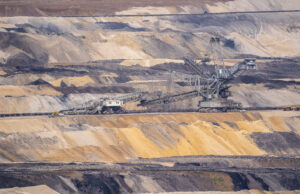
Asphalt concrete plant, director
Manager Yulia called and offered advice on the need to develop and obtain environmental documentation. We had a question on our “agenda” – to determine the difference between a special water use permit and a special permit for the use of subsoil.
Yulia answered questions within the framework of a free audit and identified the need to obtain a permit for special water use, as we have a well on the balance sheet from which water is taken more than 5 cubic meters per day, but not more than 300 cubic meters per day.
We managed to save the company from paying penalties in the amount of 5 times for using water without the established limit for water intake in the permit for special water use.
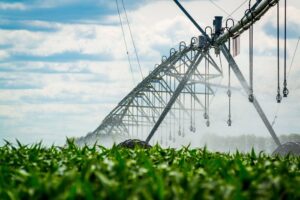
The enterprise for growing crops,
director
We found ESL on the Internet, looked at the website and decided to test a free consultation. We asked about the possibility of adjusting the existing emission permit.
Oleksiy contacted us and not only answered our questions, but also advised on the measurement of our sources of pollutant emissions into the air. Working with experts is very comfortable, so we chose ESL.
The guys registered a report on the inventory of emission sources, and registered the enterprise with the Ministry of Environment of Ukraine. They received a permit for emissions of pollutants into the atmosphere for 10 years.
As a result, we have put in order the environmental documentation in and streamlined the payment to the tax authorities for air pollution.
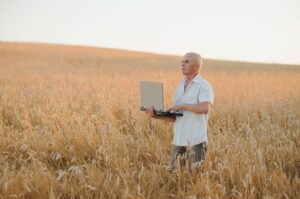
Grain terminal,
environmental protection specialist

We found ESL on Facebook, contacted the messenger with a question about the need to develop a declaration or register card for waste.
The company’s specialists conducted a free audit of documentation with a visit to the enterprise, developed a register card according to form number 2 and included it in the register of waste generation facilities.
We have finally figured out the nomenclature and volumes of waste generation, quantitative and qualitative characteristics of waste. Now there are plans for measures to reduce the volume of waste generation and the degree of their hazard.
ESL was recommended by friends who have been working with ESL for many years.
We asked a question regarding the timing of the registered waste inventory report. The main point in the decision to work with the company was the availability of certificates and certificates that give the right to develop project documents.
Specialists visited the site, identified new types of waste that were not included in the existing inventory, conducted a re-inventory and received positive responses from the Department of Ecology of Odesa Oblast.
As a result, we have an understanding of what types of waste are generated at the enterprise and how to handle them.
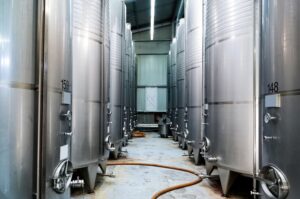
The winery,
chief engineer
